Category Archives:

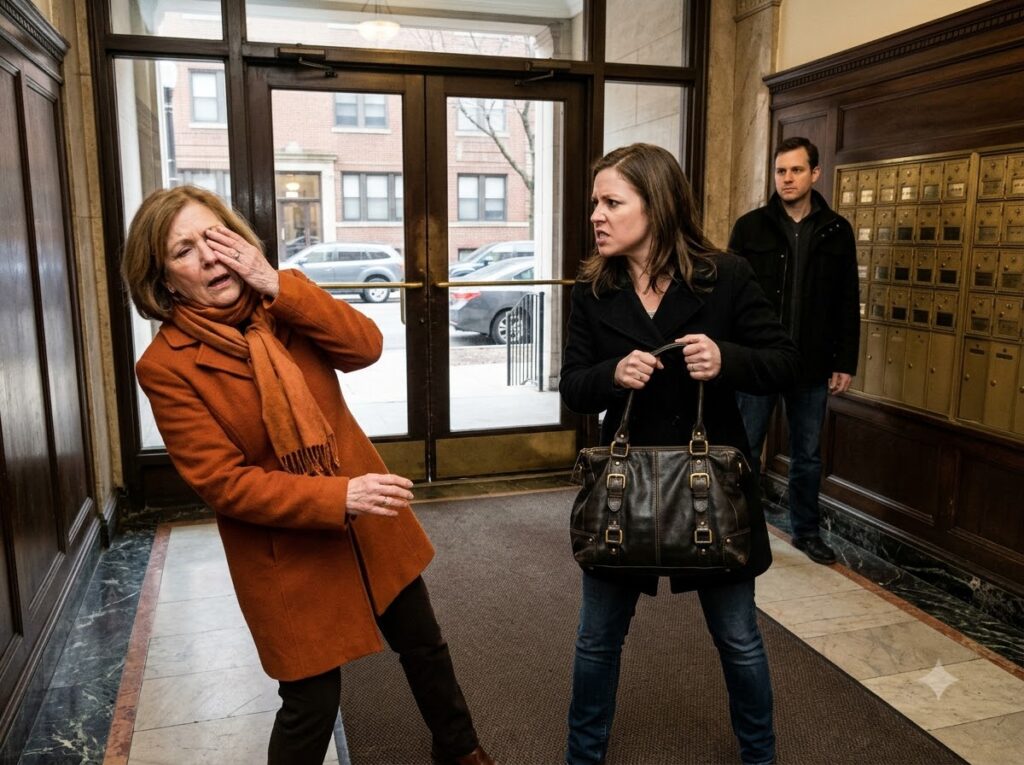
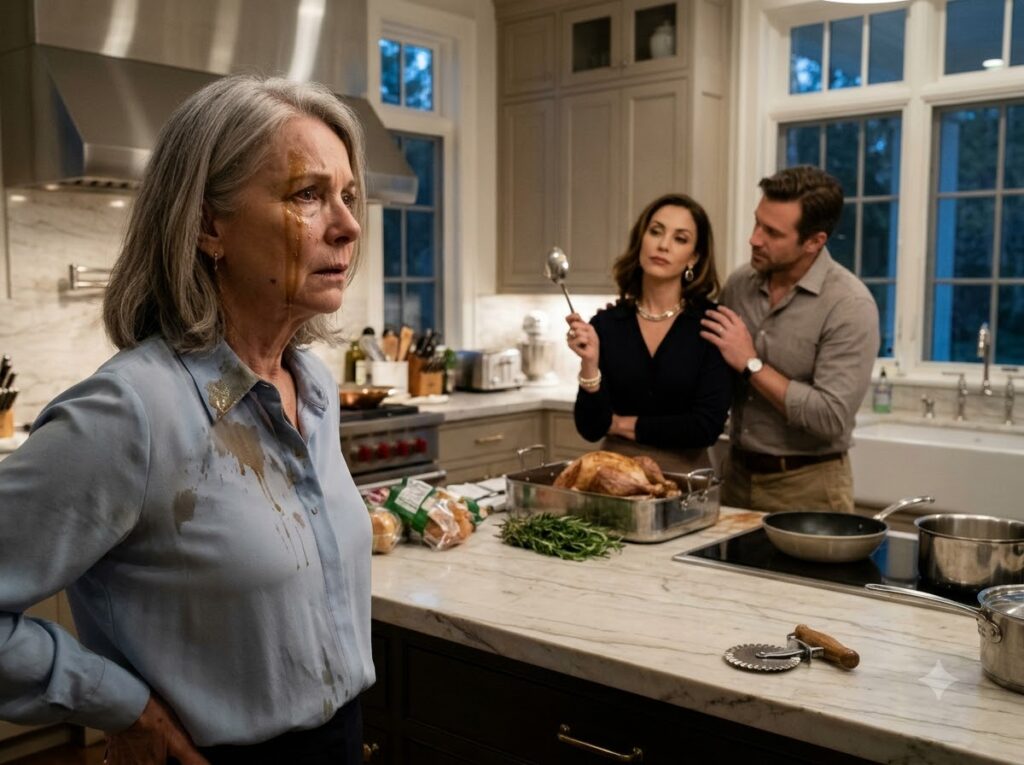
The gravy on my cheek was still warm. It slowly traveled down my jawline, a thick, savory tear of humiliation that finally dripped onto the collar of my pale blue blouse. For three years, I had swallowed my pride. I had bitten my tongue when Vanessa casually insulted my clothes, my hair, and my modest apartment. I had looked the other way when she demanded Daniel stop giving me a monthly allowance—an allowance that was actually the repayment of a loan I had given him. I had endured being treated like an unpaid maid, a babysitter, and a nuisance, all because I loved my son. I had believed that if I just loved him enough, if I was just patient enough, he would remember the mother who had sacrificed everything for him.

  But as I looked at Daniel—my 32-year-old son, standing in his custom-tailored suit, his hand gently stroking the arm of the woman who had just spat food in my…
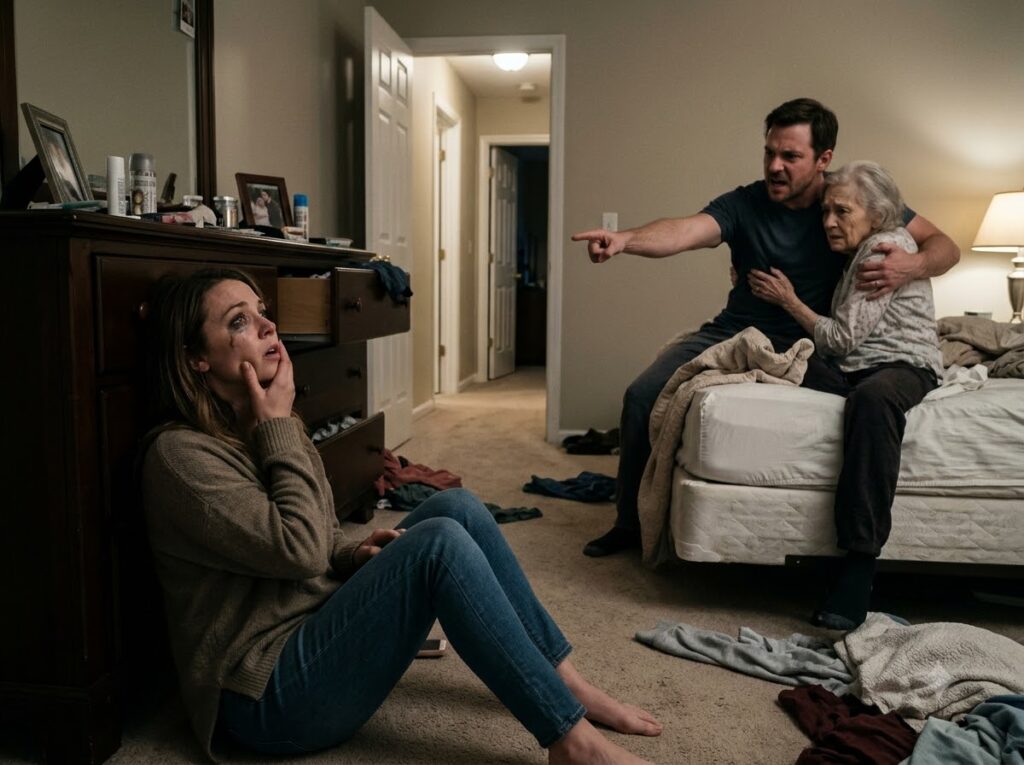
The police marched up the stairs, their heavy footsteps echoing through the house. Two officers entered the bedroom, taking in the chaotic scene. Robert immediately handed over his phone, showing them the thirty-second clip of Danielle pinning his mother down.Forty Floors Up The deposition took place two weeks later in a glass-walled conference room forty floors above the city center. Danielle sat across the mahogany table in a crisp charcoal suit, her hair pulled back into an immaculate bun. The makeup around her jawline could not entirely conceal the faded bruising from months before. Her attorney, an aggressive litigator named Sterling, spread a thick dossier across the table with triumphant confidence. “My client was subjected to domestic battery inside her own residence,” Sterling announced, leaning forward over his manicured hands. “Furthermore, the marital property was maintained using commingled funds under a valid power of attorney executed by Mrs. Margaret Vance.” “If Mr. Vance is unwilling to surrender fifty percent of the residential value and pay thirty-six months of rehabilitative spousal support, we will take this before a jury and highlight the assault.” Robert sat next to his attorney, his arms folded across his chest, completely silent. His lawyer, Elena Cruz, didn’t raise her voice. She simply slid a manila folder across the glossy wood toward Sterling. “Before you talk about juries, counselor, you might want to examine Exhibit D,” Cruz said. “That is a sworn forensic affidavit from the State Department of Notaries.” “It details five counts of felony notary fraud committed by your client and her first cousin, Jason Miller.” Danielle’s gaze snapped to the paper. The slight smirk on her lips vanished. “What is this?” she hissed, looking sideways at her attorney. “It is proof that you forged your mother-in-law’s endorsement on three separate real estate affidavits,” Cruz continued, tapping the folder with her fountain pen. “It also includes audio transcripts from the afternoon of November fourteenth.” “In those recordings, your client clearly instructs Jason on how to falsify the witness log and backdate the stamp while Mrs. Vance feigned sleep in the next room.” “The District Attorney’s office already has the originals.” “They are preparing an indictment for grand larceny and elder exploitation under the state’s organized fraud statutes.” Danielle’s breathing grew ragged. The polished facade cracked into jagged pieces. For Us “Robert,” she stammered, turning her eyes to him for the first time since she had been placed into the squad car. “Robert, please… I did that for us.” “You were working seventy hours a week, killing yourself for a company that didn’t care about you.” “Your mother was costing twenty thousand dollars a year in physical therapy and medications.” “I was trying to protect our future so we could finally start a family of our own.” Robert leaned forward. He looked into the eyes of the woman he had loved for seven years. He didn’t see the woman who had walked down the aisle toward him in white lace. He saw the calculated hollow that had allowed his mother to cry alone in the dark. “You didn’t do it for us, Danielle,” Robert said, his voice terrifyingly calm. “You did it because you couldn’t stand sharing my attention, my income, or my life with someone who couldn’t give you anything in return.” “You saw a sick woman who needed care, and you decided her existence was an inconvenience to your timeline.” Sterling frantically closed his brief. His earlier swagger was gone. “We need ten minutes in private with our client,” Sterling whispered, grabbing Danielle’s wrist to silence her before she could dig her hole deeper. “Take all the time you need,” Cruz replied. “Because the moment we walk out of this room, the waiver of property rights goes into effect.” “If she signs the quitclaim deed and surrenders every penny of the trust right now, the DA has agreed to treat the fraud as concurrent with her pending elder abuse probation.” “If she refuses, she faces eight to ten years in the state correctional facility for women.” Danielle didn’t need ten minutes. She took the pen with trembling fingers. Her tears splashed onto the pristine paper. She signed her name away until nothing of her remained attached to the Vance family name. She walked out of the high-rise without looking back, leaving only the scent of cheap perfume and the echo of clicked heels on polished marble. Robert did not watch the elevator doors close. Cruz stacked the signed pages, tapped them even, and slid the tin’s copies back into her briefcase as if they were ordinary exhibits and not the thing that had kept a house from being stolen in daylight. “Your mother is a better witness than most professionals I put on a stand,” Cruz said. Robert nodded once. He did not trust his voice with anything longer. Chicken Broth and Maple Leaves Three months later, the early chill of autumn settled over the suburban neighborhood. The garden beds had been cleared for the frost, tucked beneath dark layers of fresh cedar mulch. Robert pulled his truck into the driveway at five o’clock sharp, carrying a paper sack filled with fresh butternut squash and sourdough bread from the farmer’s market. He stepped through the front door and took off his jacket, hanging it on the peg in the entryway. The house did not smell of medicine or quiet dread anymore. It smelled of simmering chicken broth, roasted garlic, and cinnamon tea. In the kitchen, Margaret stood beside the stove, wearing an apron over her woolen sweater, humming an old melody that had belonged to her youth. Her hands still bore the faint traces of the arthritis that slowed her fingers. The trembling was completely gone. “You’re home early,” she said, glancing over her shoulder with a broad, bright smile. “I told my manager I don’t work past four-thirty on Fridays,” Robert said, setting the groceries onto the counter and kissing the crown of her gray head. “A company that doesn’t understand family isn’t a company worth building a career for.” Margaret stirred the pot. Steam rose between them like a warm, protective veil. “Your father used to say that exact same thing,” she murmured. “He was a smart man,” Robert replied, rolling up his sleeves to wash the vegetables. “Took me long enough to inherit his sense.” They worked side by side in the golden twilight that spilled through the kitchen windows. Outside, the first red leaves drifted down from the maple tree, settling quietly onto the lawn. The house was not empty anymore. It was filled with the only thing that had ever truly mattered: the deliberate, unhurried choice to stay, to protect, and to love the people who had given everything so you could stand on your own two feet. Robert rinsed the squash and set it on the cutting board. Margaret passed him the wooden spoon without being asked. Neither of them mentioned Danielle. Neither of them needed to. The locks had been changed. The accounts were unfrozen. The tin sat in a safe-deposit box now, empty of its ledgers, its job finished. When the soup came to a slow roll, Margaret tasted it, nodded once, and turned the flame down. “That’s closer,” she said. “Closer is good,” Robert said. He looked at her in the kitchen light — really looking, the way he had promised himself he would keep doing — and she looked back without fear in the set of her shoulders. The maple leaves kept falling. The house kept its quiet. This time the quiet breathed back. What do you think about this story? Leave your comment below! 👇

  Despite Danielle’s frantic pleas that she was only trying to wake the older woman from a violent night terror, the officers handcuffed her. “Watch the rest of the footage,…

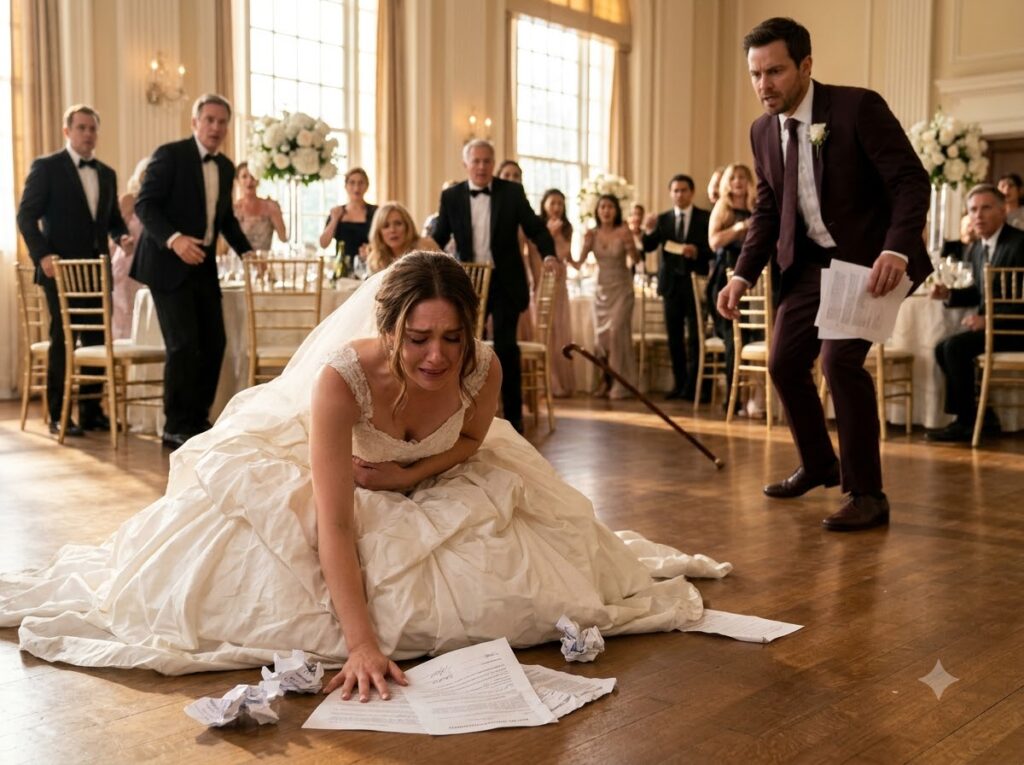
Grant moved faster than the gasps echoing off the vaulted ceiling. The crumpled sheets of paper—the damning dossier his father, Elias, had shoved into his chest just moments before—slipped from his fingers, scattering like dead leaves across the marble floor. Elias raised the heavy mahogany cane for a second strike, his face twisted in a mask of aristocratic fury, but Grant’s hand locked around the polished wood mid-air. The sharp crack of bone against timber snapped the reception hall out of its paralysis.

  “Get away from her,” Grant snarled, his voice a low, terrifying rumble that carried over the rising panic of the guests. He wrenched the cane from the older man’s…

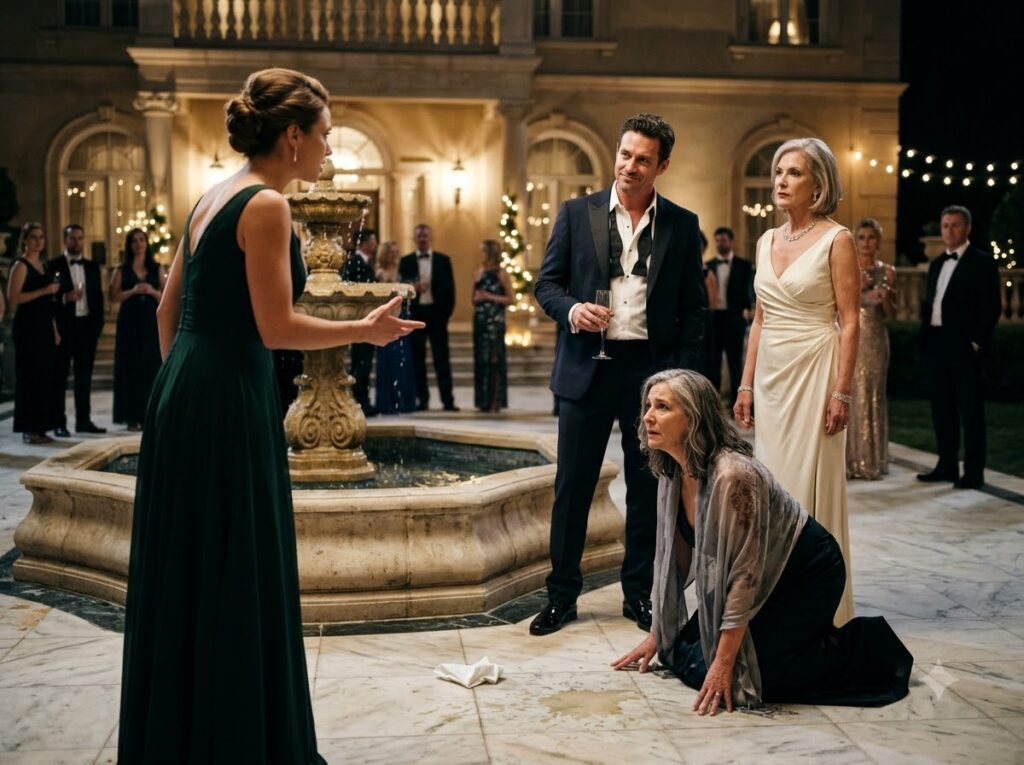
The silence on the terrace deepened, thickening into something heavy and suffocating. The string quartet in the corner had completely stopped playing, their bows hovering awkwardly over their instruments. The elite of the city—senators, socialites, and CEO colleagues of my husband—stood frozen, their eyes darting between me, the spilled champagne, and the arrogant smirk plastered across Garrett’s handsome face.

  Garrett let out a low, patronizing chuckle, shifting his weight. “Excuse me, Alessia?” he asked, his tone dripping with the kind of condescension he usually reserved for errant staff.…

The silence on the terrace deepened, thickening into something heavy and suffocating. The string quartet in the corner had completely stopped playing, their bows hovering awkwardly over their instruments. The elite of the city—senators, socialites, and CEO colleagues of my husband—stood frozen, their eyes darting between me, the spilled champagne, and the arrogant smirk plastered across Garrett’s handsome face.3 | PART 5: LEARN YOUR PLACE My divorce did not ruin Garrett. I mention that because people prefer cleaner endings. They want cruel men to lose their money. They want boardrooms to reject them. They want friends to vanish. They want karma to arrive in a black car wearing an expensive suit and carrying legal papers. Life rarely cooperates. Garrett kept his job. He kept most of his friends. He continued attending charity dinners. Investment conferences. Private clubs. Fundraisers. He remained handsome. He remained persuasive. Some people who watched him kick my mother continued doing business with him. A few said they did not want to take sides. Others said marriage was complicated. Some said everyone had been drinking. Some reminded me I punched him first. They were right about that part. I should not have hit him. Recognizing that never required me to pretend the rest had vanished. That became another lesson. Accountability was not a competition. I did not need to become innocent for Garrett to be responsible. He did not need to become pure evil for me to leave him. Reality could hold multiple uncomfortable truths. I struck him. He had humiliated and kicked my mother. He tried to strike me afterward. I left. All true. Other people quietly distanced themselves from Garrett. Not because I asked them. I did not. I had spent enough years managing people’s opinions on his behalf. I refused to manage them against him. What surprised me was how much of Garrett’s social power had depended on invisible work. Mine. Evelyn’s. Assistants. Staff. Friends. People who called restaurants when he was late. People who laughed when jokes turned cruel. People who explained that he “didn’t mean it.” People who warned new employees not to take him personally. People who corrected stories after he left a room. People who invited him because someone else they trusted was arriving with him. I had been part of that machinery. So had Evelyn. When we stopped, Garrett did not collapse. He simply had to carry his own weight. For a man accustomed to being carried invisibly, that felt like persecution. He called several times during the first month. I answered twice. The first call lasted twelve minutes. His voice sounded different. No threat. No practiced charm. “I’m sorry.” I waited. “For what?” He breathed out. “For Miriam.” Nothing. “For what I said.” Nothing. “For the champagne.” Nothing. “For my foot.” His voice tightened around the word. “For swinging at you.” Nothing. “For threatening you afterward.” There it was. A real apology. No conditions. No explanation of intention. No mention of my punch. No: But you— No: You have to understand— I sat at my desk listening. “I’m in counseling.” “I’m glad.” “My therapist says I use anger to regain control.” I said nothing. “I know that sounds obvious to you.” “It does.” A faint laugh. “I deserved that.” “That wasn’t punishment.” “I know.” He paused. “I’ve been thinking about Miriam.” Nothing. “I thought she looked down on me.” Nothing. “I think maybe I hated that she didn’t need anything from me.” That surprised me. “What?” “Your mother never cared who I knew.” Nothing. “She never wanted invitations.” Nothing. “She didn’t care about my family name.” Nothing. “She wasn’t impressed by anything I was good at impressing people with.” His voice dropped. “I think I interpreted that as judgment.” I closed my eyes. Maybe. Maybe not. Garrett had begun doing something new. Looking for explanations that did not erase responsibility. That mattered. Then: “Does any of this change your mind?” There it was. Access hidden inside apology. “No.” Silence. “So what’s the point?” I closed my eyes. “The point of changing?” “Yes.” “That cannot be me.” He did not understand. Not yet. Maybe eventually. We ended the call. The second came six weeks later. He sounded tired. Not dramatic tired. Ordinary. “I think you were right.” I gripped the phone. “About what?” “I thought apologizing was supposed to restore things.” My throat tightened. “And?” “My therapist asked whether I would still be sorry if you never came back.” I sat down. “What did you say?” “I got angry.” That was so honest I almost smiled. He continued. “Then I realized that was the answer.” Silence. “I’m sorry about Miriam.” “I’ll tell her.” “No.” “What?” “You should.” He went quiet. “Yes.” “Miriam gets to decide whether she wants to hear it.” “Yes.” Pause. “Alessia?” “Yes?” “Do you hate me?” I considered lying. “No.” He exhaled. “That almost feels worse.” “I know.” We never had another truly personal phone conversation. Everything after that went through attorneys. Miriam returned to her own house three weeks after the party. She had stayed because she thought I needed her. She left because she realized I needed to discover that being alone did not mean being abandoned. On her last morning, I found her cleaning the guest bathroom. I stood in the doorway. “You have got to be kidding me.” She looked over her shoulder. “What?” “I have people who clean.” “You have people who clean the whole house?” “Yes.” “Every bathroom?” “Yes.” “That seems excessive.” “You are not scrubbing a toilet in this house after someone told you to learn your place.” Her mouth twitched. “Oh, is that what this is about?” “Yes.” She put down the brush. “Fine.” “Thank you.” “But the sink is disgusting.” “Mama.” “Fine.” We carried her suitcase downstairs. At the front door: “You’ll call?” “Yes.” “Not only when you’re sad.” “Yes.” “Eat.” “Yes.” “Sleep.” “I’ll try.” Then she adjusted her scarf. “And don’t turn Garrett into the worst thing that ever happened to you.” I stared. “What?” “It gives him too much importance.” Only my mother could make wisdom sound like an accusation. “He hurt me.” “Yes.” “I wasted years.” “No.” “I stayed too long.” “Maybe.” I stared. She sighed. “Some of those years were happy.” “Yes.” “You learned things.” “Yes.” “You built your company.” “Yes.” “You loved someone.” “Yes.” “Then don’t hand eight years of your life to him and call them his.” My eyes filled. “He doesn’t get them.” “No.” She kissed my cheek. Then left. I stood in the doorway until her car disappeared. Afterward, the house was painfully quiet. That night, I almost called Garrett. Almost. Not because I wanted the marriage back. Because pain remembers familiar medicine. For eight years, when something frightened me, Garrett was often the person I called. Removing the person did not remove the reflex. Instead, I walked onto the terrace. The silver console had been replaced. The champagne tower was gone. The fountain cleaned. The stone repaired. There was no sign of what had happened. That bothered me. A month earlier, Garrett had been sitting there soaked and furious. Miriam gripping the stone edge. Evelyn whispering: Exactly. Now: Water. I reached into my pocket. The ring. I had carried it for days. I would move it from dress pocket to purse. Purse to desk. Desk back to pocket. Maybe part of me wanted to throw it into the fountain. That would have made a satisfying ending. The diamond hitting water. Sinking beneath reflections. Symbolic release. I almost laughed. Real endings are inconvenient. There are appraisals. Insurance. Tax questions. Settlement documents. Eventually, I sold it. I used some of the money to take Miriam to Italy. She complained about the cost until I reminded her whose ring paid for the trip. That silenced her for approximately four minutes. We went to Florence. Rome. A small town in Tuscany where Miriam declared every meal too expensive and then ordered dessert. One afternoon, we stood outside a church nearly six hundred years old. She touched the stone. “Can you imagine everything this has seen?” I thought of my house. The fountain. Memory. Places holding stories long after people had stopped telling them. “Probably too much.” She looked at me. Then smiled. We never discussed Garrett that day. That mattered. My life was beginning to contain hours in which he did not exist. The divorce became final seven months after the party. That morning, I woke expecting something dramatic. Relief. Grief. Triumph. Anything. Instead, I was hungry. I made eggs. Went to work. At 10:23, my attorney emailed: The decree has been entered. You are officially divorced. At 10:24, I was reviewing drawings for a hotel lobby. At 10:30, I went into the bathroom and cried for seven minutes. Then washed my face. Returned to the meeting. That was how an eight-year marriage ended. Not beside the fountain. Not when I threw the ring. Not when Garrett left. It ended in a bright office bathroom while someone outside waited to ask whether I preferred limestone or marble. Three days later, a letter arrived from Evelyn. I nearly threw it away. Then I saw Miriam’s name on the first page. I read it. Evelyn did not ask forgiveness. She did not explain again. She wrote that she had mistaken protecting Garrett from consequences for loving him. She had mistaken silence for peace. She admitted what she did to Miriam was unacceptable even if it exposed a truth. One sentence stopped me. I made another woman pay for a lesson I should have taught my son myself. I photographed that paragraph. Sent it to Miriam. Ten minutes later: At least she can finally write a proper apology. That was all. For months, Evelyn and I barely spoke. I did not know what to call her. Former mother-in-law sounded clinical. Evelyn felt intimate. Eventually, she became simply a person I had once loved because she was connected to someone I loved. That was enough. Almost a year after the party, Miriam surprised me. “I’m having lunch with Evelyn.” I nearly dropped my phone. “You’re what?” “Lunch.” “I heard that part.” “She called.” “And?” “I said yes.” “Why?” Pause. “Because I wanted to.” I leaned back. That was the lesson apparently. Everybody made their own choices. “How do you feel?” “I’ll tell you afterward.” “No, seriously.” “Alessia.” “What?” “You spent eight years interpreting everyone’s feelings.” I closed my eyes. “Right.” “I’ll call tonight.” She did. “How was it?” “Lunch.” “Mama.” “Fine.” “You forgive her?” “No.” “You hate her?” “No.” “Are you going again?” “Maybe.” “What did you talk about?” “You.” “Of course.” “She thinks you’re stubborn.” “She thinks I’m stubborn?” “I agreed.” “Unbelievable.” Miriam laughed. I had never heard her laugh that way about Evelyn. Something inside me loosened. Not everything needed to return to what it had been. Sometimes people formed entirely new relationships with the ruins. One year and three months after the fountain, I hosted another dinner. Smaller. Forty people. Clients. Friends. Staff. No strategic guest list designed around Garrett’s circles. Miriam arrived early in a dark green dress. She walked onto the terrace. “No champagne attacks tonight?” I stared. She smiled. “That joke is in poor taste.” “Terrible.” “You should apologize.” “I won’t.” She kissed my cheek. During dinner, a young server stumbled beside the fountain. A tray tilted. Two glasses fell. One shattered. The boy froze. His face went pale. “I am so sorry, Ms. Hart—” I had kept Garrett’s surname professionally almost a year because changing contracts, accounts, licenses, press materials, and hundreds of administrative details felt exhausting. One month earlier, I had finally returned to my own name. “Alessia,” I corrected. He stared. “What?” “My name is Alessia.” His eyes dropped to the glass. “I’ll clean it immediately.” “Of course.” He bent. Then stopped because I bent too. I picked up one unbroken glass. He looked horrified. “You don’t have to.” “I know.” Across the terrace, Miriam watched. Our eyes met. Neither of us spoke. Someone brought a broom. The mess disappeared in less than a minute. No humiliation. No performance. No lesson. Just broken glass. That was all it had ever needed to be. Later, after the guests left, Miriam and I sat beside the fountain with our shoes off. “Remember when you wanted to remove this thing?” “The fountain?” “Yes.” “I still might.” “No.” “Why?” “Too much history.” I laughed. “That sounds like an argument for removing it.” She considered. “Maybe.” The city stretched below us. My life looked different. Not dramatically. Better in ways too small for photographs. I slept through nights. I stopped checking someone’s face before expressing an opinion. I no longer rehearsed difficult sentences in advance. Friends became louder in my house. My staff stopped asking whether Garrett would attend events. Miriam no longer changed clothes because of a joke someone made. Freedom, I learned, was rarely a door bursting open. Mostly it was the absence of tiny fears. No footsteps you were listening for. No expression you were monitoring. No joke you had to explain. No apology you needed to earn. A week after the dinner, I saw Garrett for the first time since the divorce. Hotel opening. Neutral ground. Hundreds of people. I noticed him before he saw me. He looked older. Not ruined. Not broken. Older. He stood beside the bar speaking with two men. Then he laughed. For a moment, my chest tightened. A physical memory. Then he turned. Our eyes met. The room did not disappear. My heart did not stop. Nothing cinematic happened. He excused himself. Walked toward me. “Hi.” “Hi.” Awkward silence. His eyes moved toward my left hand. No ring. Then my face. “You look good.” “So do you.” A faint smile. “I heard the firm won the Beacon project.” “We did.” “Congratulations.” “Thank you.” His hands entered his pockets. “How’s Miriam?” “Good.” He nodded. “I met with her.” I stared. “She didn’t tell you?” “No.” “I asked first.” “What happened?” He exhaled. “I apologized.” “And?” “She said thank you.” I waited. “That was it?” “That was it.” A smile pulled at my mouth. “That sounds like her.” “Yes.” Silence. Then: “She told me something.” I became cautious. “What?” “That I spent so much time worrying about my place in your life that I never learned how to stand there without pushing somebody else out.” My breath caught. Yes. Exactly Miriam. “What did you say?” “Nothing.” “Probably wise.” He laughed softly. For the first time, the sound did not pull me backward. It belonged to someone I had known. Someone I no longer knew. “I’m sorry.” I looked at him. “For all of it.” “I know.” “I don’t expect anything.” That mattered. More than the apology itself. “Good.” He looked away. Then smiled sadly. “I used to hate when you said things like that.” “I know.” “You never made them easy.” “I spent eight years making everything easy for you.” He winced. “Fair.” Someone called my name. A client waved. I looked over. Then back. “I should go.” “Yeah.” I started walking. “Alessia.” I stopped. He did not ask me back. Did not warn me. Did not tell me I would regret leaving. He simply said: “I’m glad you’re okay.” I looked at him for a moment. “I hope you become okay too.” Then I walked away. I did not look back. Not because I needed to prove anything. Because I had somewhere else to be. Months later, Evelyn came to my house with an old photograph album she had found among Garrett’s things. Time had made speaking with her easier. Not easy. Easier. We stood in my kitchen. The terrace visible through glass doors. I asked: “You already told me what you meant when you said exactly.” She looked at me. “But?” “I don’t think you told me all of it.” “What do you mean?” “When I threw the ring.” Evelyn remained silent for a long time. Then sat. “I had spent years waiting for you to become angry enough.” My chest tightened. “At him?” “At all of us.” I frowned. “Garrett for hurting you.” Nothing. “Me for explaining him.” Nothing. “Yourself for participating.” “You wanted me angry.” “I thought anger might free you.” I considered that. “It almost destroyed me.” “Yes.” “My mother paid for it.” “Yes.” “I still don’t forgive that.” “I know.” “Do you regret saying it?” “Every day.” “Then why exactly?” Evelyn looked toward the terrace. “Because when you removed your ring, you were not asking anybody whether you were allowed.” Silence. “That was all.” I studied her. Maybe she was telling the whole truth. Maybe human motives were never that clean. Maybe part of Evelyn wanted revenge on the son she had spent a lifetime protecting. Maybe part wanted absolution. Maybe part wanted to believe exposing Garrett could erase the years she enabled him. None of that was mine to solve. “You know what I eventually realized?” “What?” “You were wrong.” Her eyebrows lifted. “About what?” “I didn’t need anger to free me.” “No?” “No.” I looked through the doors. Water moved in the fountain. “I needed to believe what I saw.” Evelyn’s face softened. “Yes.” “Not what Garrett intended.” Nothing. “Not what you meant.” Nothing. “Not what people would think.” I looked at her. “What I saw.” She nodded. That was the last conversation we ever had about the party. Eventually, I stopped calling it the worst night of my marriage. The worst nights were quieter. The nights when I went to bed knowing something was wrong and persuaded myself it was not serious enough. The fountain was simply the night everything became impossible to rename. Garrett did not “lose his temper.” He kicked my mother. Evelyn did not “make an unfortunate comment.” She knowingly participated in humiliating Miriam. I did not “overreact.” I made a choice after years of refusing to make one. Some parts of that choice were messy. Some I regretted. Some I would never repeat. Leaving was not one of them. My mother had spent her life being told where she belonged. As a young woman without money. As a single mother. As a guest among wealthy people. As the mother-in-law Garrett tolerated because she came attached to me. That night, he told her to learn her place. He believed her place was beneath him. He believed mine was beside him. Evelyn, in her own terrible way, believed my place was wherever I finally became brave enough to stand. They were all wrong. Nobody else gets to assign you a place in your own life. Not a husband. Not a parent. Not a family name. Not money. Not fear. Not even love. My mother’s place was wherever she could stand with dignity. Evelyn’s place was inside the consequences of the choices she had made. Garrett’s place was no longer mine to determine. And mine? It took me eight years, a ruined party, a bruised mother, a broken champagne tower, and a wedding ring thrown against a wet tuxedo to understand something that should have been simple. My place was not at Garrett’s side at any cost. My place was not beneath his anger. My place was not between him and the consequences of his choices. My place was wherever I could tell the truth without asking permission. The night Garrett kicked my mother, I thought I had destroyed my marriage. I hadn’t. I had finally stopped protecting what had already destroyed itself. And when I remember him sitting inside that fountain, soaked and stunned while a hundred people watched the version of him I had spent years explaining away, I no longer remember the sound of breaking crystal. I remember my mother’s hand on my arm. Protect yourself before you protect me. For once, I did something different. I protected us both. And then I spent the rest of my life learning that I was allowed to.

  Garrett let out a low, patronizing chuckle, shifting his weight. “Excuse me, Alessia?” he asked, his tone dripping with the kind of condescension he usually reserved for errant staff.…

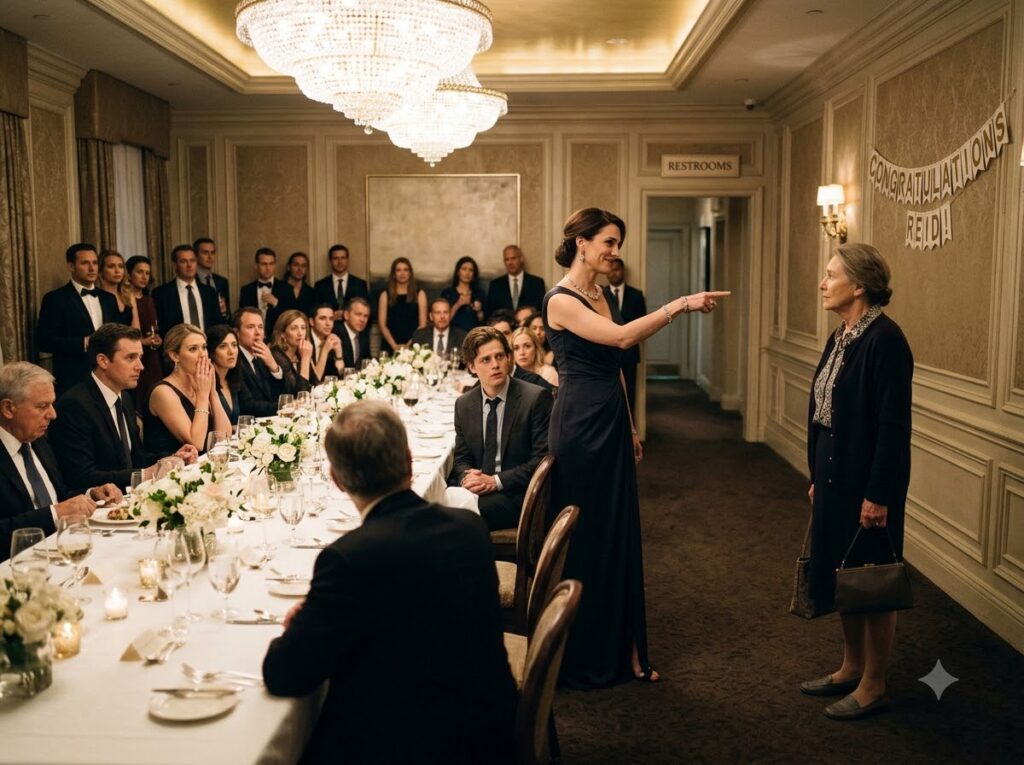
Il silenzio nella sala privata del ristorante fu così profondo che si sarebbe potuto udire il battito delle ali di una mosca. Sotto il lampadario di cristallo che rifletteva la luce su bicchieri di baccarat e composizioni floreali importate, le parole di Tessa risuonarono come un colpo di frusta.

  “Vattene in bagno, Wilma. Tanto sei abituata a essere invisibile.” Mio figlio Reid, seduto accanto a sua moglie con un completo su misura che gli calzava a pennello, abbassò…

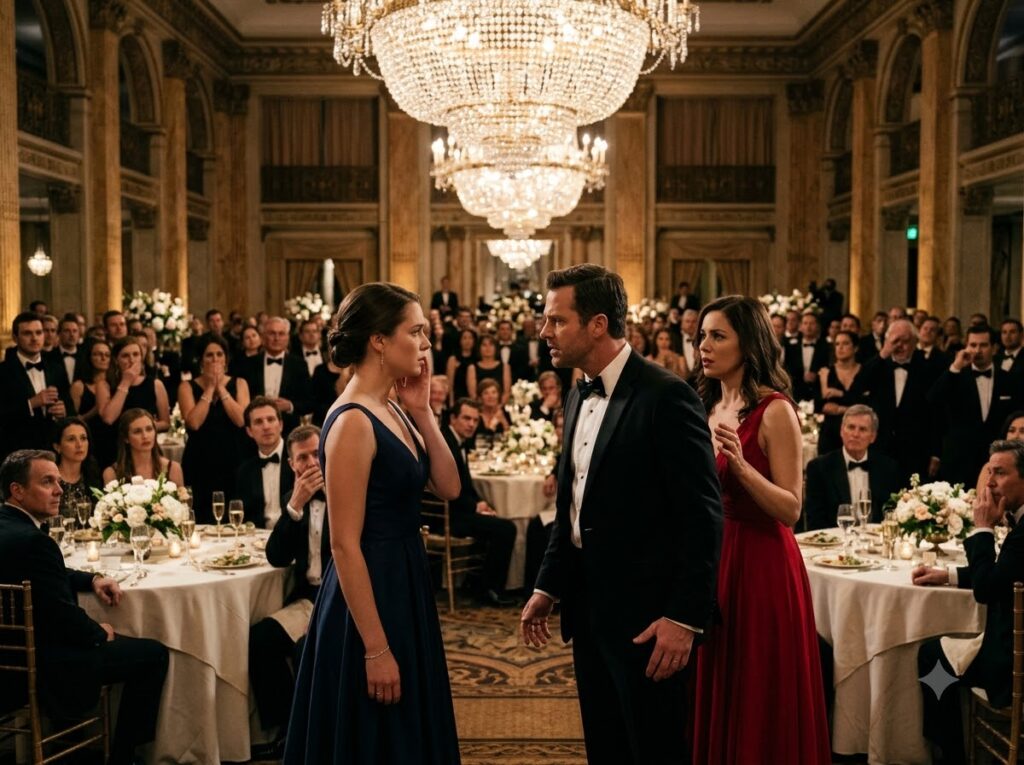
Il silenzio che seguì lo schiaffo fu così pesante che parve quasi tangibile, rotto solo dal tintinnio lontano di un bicchiere di cristallo posato troppo in fretta su un vassoio d’argento. Sotto i lampadari di cristallo di Boemia della sala da ballo dell’Ashbury Hotel, trecento paia di occhi erano fissi su di me.

  Ero immobile. Una guancia mi bruciava, una chiazza rossa che spiccava contro la mia pelle chiara, ma il dolore fisico era poca cosa rispetto al gelo improvviso che mi…

Il silenzio nella sala da pranzo si allungò, sottile e fragile come vetro filato, mentre il segno rosso sulla mia guancia pulsava a ritmo con il mio cuore in corsa. Osservai le spalle di Nathan incurvarsi leggermente, un ritiro fisico nella sua stessa codardia. Non mi guardò. Non guardò sua sorella, Vanessa, che era ancora in piedi con il petto ansante in un trionfo arrogante, e non guardò nemmeno sua madre, Eleanor, che sorseggiava il suo Cabernet con un’espressione di lieve, distaccato divertimento.

La pace che avevo coltivato nella mia casa non era una cosa fragile e temporanea. Era una fortezza costruita sull’assoluta intolleranza per la mancanza di rispetto. Col passare degli anni,…