The Whitmore mansion had completely unraveled. The sprawling lawns, usually manicured to millimeter perfection twice a week, were already strewn with fallen eucalyptus leaves and debris. The heated pool in the central courtyard had turned a murky, cloudy green after the automated filtration pumps shut down.
Inside, Vivian Whitmore was sitting in the cold drawing room, clutching an empty porcelain cup. Her stomach was cramping painfully—the specialty alkaline mineral water she drank to manage her chronic gastritis had run out, and the tap water tasted of copper and lime.
She picked up her landline phone to call her personal physician, but the line produced only a hollow, rhythmic clicking. The telecommunications account had been suspended for non-payment.
“Grant!” Vivian called out, her voice cracked and weak. “Grant, where are you?”
Grant came down the corridor, but he looked like a shell of a human being. He hadn’t shaved in three days. His eyes were hollow, sunken into dark sockets, and his hands shook constantly. He was carrying a cardboard box filled with personal files he had cleared from his office under the watchful eyes of Sterling Holdings’ armed guards the previous afternoon.
“What is it, Mother?” Grant asked, his voice dead, devoid of all energy.
“My medicine hasn’t arrived,” Vivian whimpered, her lip trembling. “And the electricity in the west wing went off an hour ago. The refrigerator is warming up! The caviar and the imported cheeses are spoiling! Call the utility company, Grant! Tell them who we are!”
Grant let out a dry, bitter laugh that sounded more like a cough.
“They know who we are, Mother,” Grant said, dropping the cardboard box onto a side table. “They know we owe eleven thousand dollars in commercial residential power bills. I tried to pay them with my remaining personal account. The check bounced. I have four hundred dollars to my name.”
Vivian stared at him, her eyes widening in horror. “Four hundred dollars? That’s impossible! What about your trust fund from your grandfather?”
“Grandfather left that trust fund tied to Whitmore Global common stock!” Grant yelled, his composure shattering. “And the stock was suspended from trading this morning following my removal! Our equity is locked under a corporate conservatorship until the defense audit clears! We have no money, Mother! Do you understand plain English? We are broke!”
Vivian pressed her hands to her ears, refusing to hear the truth. “No! It’s Claire! She’s playing games! She’s trying to punish us because she’s petty and small-minded! If I speak to her… if I go to her, woman to woman, and remind her of her duties to Rosemary’s memory, she will come to her senses. She loved Rosemary. She wouldn’t let Rosemary’s family starve!”
“Don’t do it, Mother,” Grant warned, his voice turning cold. “She isn’t the woman you bullied for three years anymore. She never was. We were just too blind to see it.”
Vivian didn’t listen. She couldn’t listen. Her entire identity, her entire fifty-year existence had been built on the absolute conviction that she was social royalty and that people like Claire existed only to serve her comforts.
She ordered Uncle Warren—who was sitting in the kitchen staring blankly at a cold can of soup—to drive her into the city in his twenty-year-old Mercedes, the only vehicle on the property that hadn’t been leased through corporate accounts.
***
The Balboa Park Cultural Pavilion was hosting the annual San Diego Heritage Philanthropy Luncheon at noon.
It was the most prestigious social event of the autumn season. For twenty years, Vivian Whitmore had occupied the head patron table, lording over the city’s socialites, handing out patron awards, and basking in the deferential bows of junior committee members.
When Warren’s sputtering car pulled up to the valet stand outside the pavilion, the valet attendants did not rush forward with umbrellas and warm smiles. They looked at the smoking exhaust pipe with polite amusement.
Vivian stepped out, lifting her chin, clutching her vintage crocodile handbag like a shield. She was wearing her finest Chanel suit, but the edges were slightly wrinkled, and her hair lacked the meticulous styling of her usual five-hundred-dollar salon blowouts.
“Wait here, Warren,” Vivian ordered, marching toward the grand marble steps of the pavilion.
Inside the reception hall, three hundred members of Southern California’s high society were gathered beneath vaulted floral installations, holding glasses of vintage Krug champagne, laughing and networking.
Vivian swept into the room, expecting the usual hush of respect, the usual chorus of *“Vivian, darling, you look divine!”*
Instead, the moment she walked through the arched entryway, the laughter died.
A cold, suffocating silence rippled outward from the doorway like a shockwave.
Conversations stopped mid-sentence. Socialites turned their heads, their eyes locking onto Vivian with an icy, merciless curiosity. Behind crystal champagne flutes, women began whispering behind their hands. Several older women—women Vivian had snubbed and insulted for decades—smiled with open, vicious satisfaction.
Vivian felt a chill race down her spine, but she forced her shoulders back and walked toward Table One—the table she had occupied every year since 2004.
Standing beside Table One was Eleanor Vance-Caldwell, the late senator’s widow who had been seated two places away from me at the disastrous dinner party three nights earlier.
“Eleanor, darling,” Vivian said, extending a gloved hand with a tight, fragile smile. “What a dreadful week it has been. The press has been simply abominable with their fabrications—”
Eleanor Caldwell did not take her hand. She stepped back, looking at Vivian as if she were a vagrant who had wandered in off the street.
“Vivian,” Eleanor said, her voice clear, carrying effortlessly over the quiet room. “I am surprised to see you here.”
Vivian blinked, her smile faltering. “Surprised? I am the honorary co-chair of this foundation, Eleanor! I have been for two decades!”
“You *were* the honorary co-chair, Vivian,” another voice spoke up.
The crowd parted.
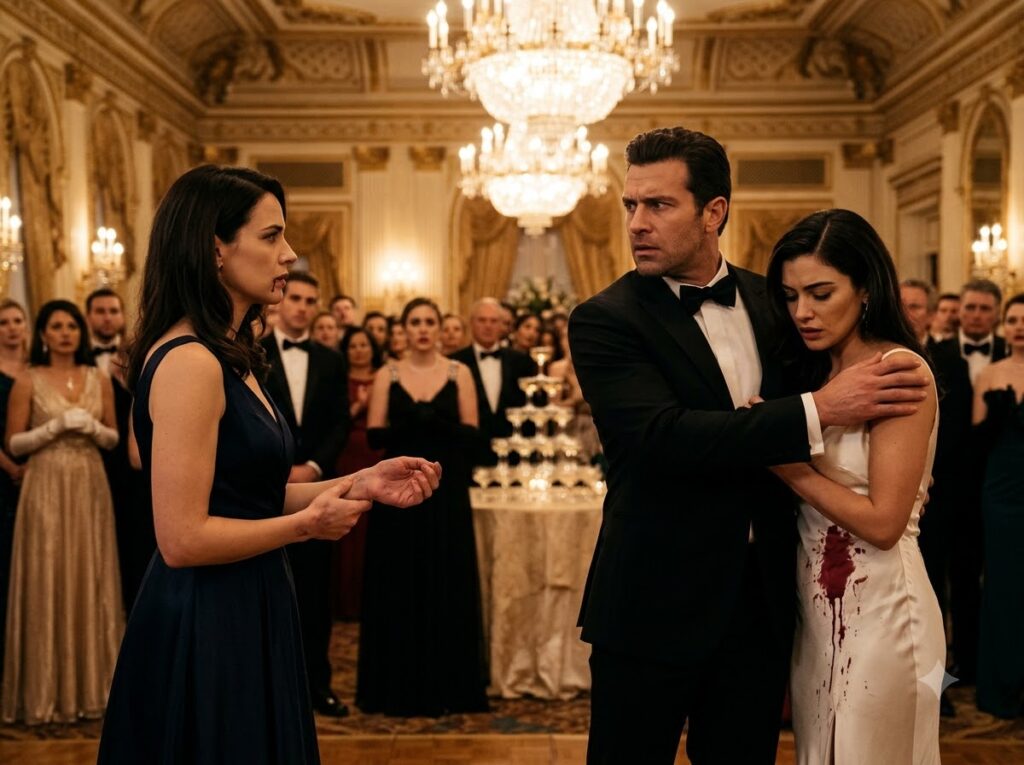
I stepped forward from the center of the room.
The sight of me took the remaining air out of Vivian’s lungs.
Popular Posts
→- 1
- 2
- 3
- 4




Recently Viewed
Stories you read recently will appear here.





