The company belonged to Claire.
Total transfers over eighteen months: $684,000.
Daniel stared.
“I’ve never seen that company.”
Claire snapped, “Because it’s an internal reimbursement entity.”
Eleanor asked, “For what?”
“Resort expenses.”
“Then why did the transfers come from my personal brokerage account?”
Claire said nothing.
Daniel looked at the transfer authorizations.
Each carried an electronic signature token linked to Eleanor.
He looked up.
“Mom, did you approve these?”
“No.”
Claire stepped forward.
“You did. You just don’t remember.”
The room changed.
That sentence.
Not: You signed.
You don’t remember.
Eleanor had heard versions for months.
You already approved that.
You forgot.
You’re tired.
You don’t need to worry about details.
She had started doubting herself.
That was why she hired an outside accountant in secret.
That was why the envelope existed.
The preliminary report found no evidence Eleanor initiated the transfers from her own devices.
The authorization requests originated from the resort administrative office after hours.
One login came from Claire’s laptop.
Another from a shared finance workstation.
A third from Daniel’s office.
Daniel stared at the page.
Claire stared at him.
Now both looked afraid for different reasons.
Eleanor closed the envelope.
“This is not the final report. It is enough to freeze every discretionary account tonight.”
Daniel said, “You froze the company?”
“No. The resort keeps operating. Payroll continues. Vendors continue. I froze access you and Claire control.”
She looked at Claire.
“Tomorrow, the bank, the accountant, and my attorney will finish tracing where my money went.”
Claire’s voice became small.
“You’re going to destroy the family.”
Eleanor shook her head.
“No. I’m going to find out what happened.”
The Christmas humiliation was visible.
Ownership was documented.
The missing money still needed proof.
And by midnight, Eleanor realized the resort itself might be the least complicated part of the story.
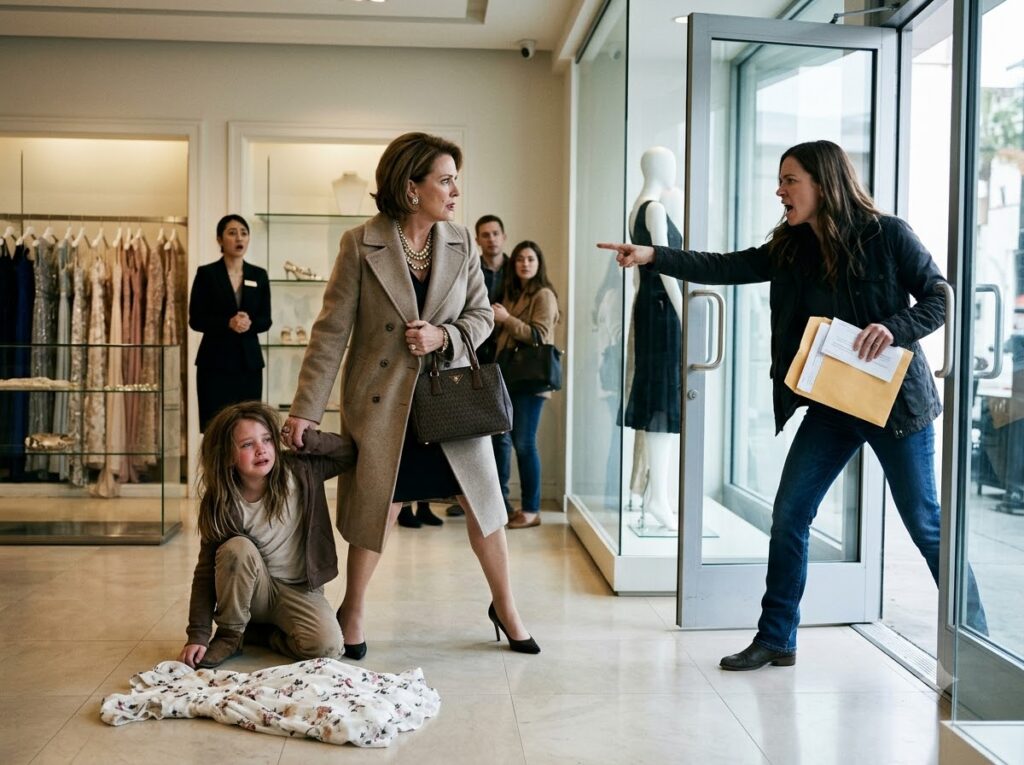
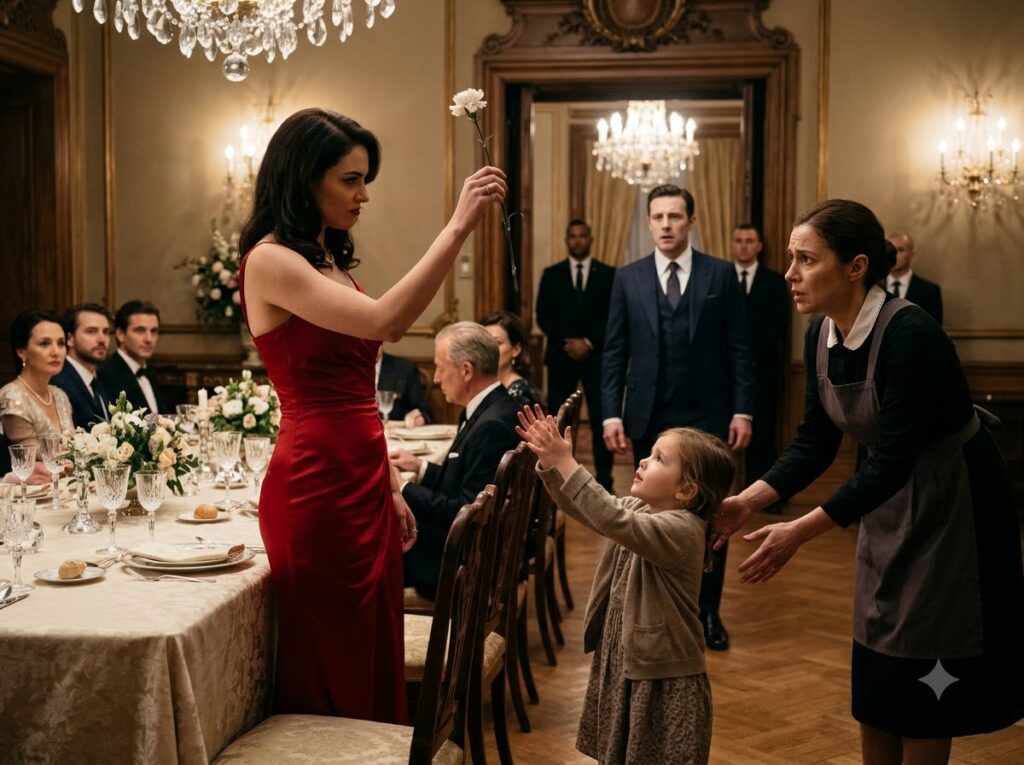
“GET OUT, YOU WORTHLESS OLD WOMAN!”—Her Son Shoved His 70-Year-Old Mother Into a Cabinet on Christmas, Until She Fought Back and Revealed She Owned Their $18 Million Resort! Then One Sealed Envelope Exposed a Betrayal That Left His Wife Desperate to Stop Her…
Chapter 2 – THE COMPANY CALLED CWM
CWM Hospitality Services had been formed two years earlier as a legitimate limited liability company with Claire Whitmore listed as sole owner, and the first thing forensic accountant Rebecca Hale told Eleanor the next morning was that the company’s existence was not itself suspicious.
Claire had done real consulting.
She had redesigned guest-services procedures, negotiated a spa vendor, created seasonal marketing plans, and coordinated luxury wedding packages, and the resort had paid CWM modest consulting fees during the first six months with those payments properly disclosed.
Then the pattern changed.
CWM began receiving money directly from Eleanor’s personal accounts.
Not Cedar Crest.
Not resort operating funds.
Eleanor.
The transfers were coded as owner capital reimbursement, executive expense true-up, estate administration support, and temporary liquidity bridge.
Rebecca asked, “Did any of those phrases mean something to you?”
“No.”
“Did you authorize a standing transfer arrangement?”
“No.”
“Did you give Claire access to your personal investment portal?”
Eleanor paused.
There was the first uncomfortable truth.
Three years earlier, after cataract surgery, Eleanor had temporarily asked Claire to help organize online statements and gave her access to an email account used for bank alerts.
Not the brokerage password.
But Claire helped set up a password manager on Eleanor’s tablet.
Could she have seen credentials?
Possibly.
Daniel also had access to the administrative email because he handled some insurance forms.
Weak boundaries.
Not permission.
Rebecca explained that they needed to separate credential access, authorized delegation, and actual transfer intent.
The bank’s logs showed Eleanor’s account had multi-factor authentication through a phone number ending in 1148.
That was not Eleanor’s current phone.
It was a number assigned to the resort’s executive office.
Who controlled it?
Claire.
Why had it become the authentication number?
Bank records showed a change request eighteen months earlier.
The request came through a signed customer-maintenance form.
Signature: Eleanor Whitmore.
Eleanor stared.
“I did not sign that.”
Could be forged.
Could be copied.
Handwriting examiners would decide later.
More importantly, the bank had accepted a paper change form without calling Eleanor independently because the signature matched account records and the request came through her long-standing relationship manager.
System failure.
Claire’s attorney later argued Eleanor may have signed during a packet of resort documents.
Possible.
Rebecca looked for context.
The form was dated the same day Eleanor signed three legitimate documents: property-tax escrow authorization, employee health-plan renewal, and a charitable foundation letter.
Those were presented by Daniel.
Daniel remembered.
“I brought her a stack in the breakfast room.”
Did Claire insert the bank form?
He said he did not know.
Claire said Eleanor requested it.
No independent witness.
Then Rebecca traced the $684,000.
Not all disappeared.
$210,000 went from CWM back into Cedar Crest during a cash-flow crunch after a snowless winter.
$84,000 paid legitimate resort vendors.
$46,000 paid taxes on the resort apartment renovation.
Those uses benefited the business.
But $344,000 remained questionable.
Luxury vehicle lease.
Claire’s credit cards.
A down payment on a condo in Aspen.
Payments to a private investment account.
Transfers to a company owned by Claire’s brother.
There.
Personal benefit.
Daniel looked sick when shown.
“Why would she use Mom’s money to fund the resort first and then herself?”
Rebecca answered:
“Because mixed legitimate and personal use can make misuse harder to notice.”
No grand theft narrative yet.
The resort’s own cash flow explained part.
Two weak ski seasons had strained working capital.
Daniel had asked Eleanor several times to inject more cash.
She refused once.
Then money started appearing through “owner reimbursement.”
Daniel assumed Eleanor had changed her mind.
Why?
Claire told him:
“Your mother approved a bridge.”
Did he verify?
No.
He wanted it to be true.
That became his role.
Daniel had not created CWM transfers.
Evidence did not yet show he did.
But he accepted money into the resort without confirming his mother intended to provide it.
Popular Posts
→- 1
- 2
- 3
- 4




Recently Viewed
Stories you read recently will appear here.