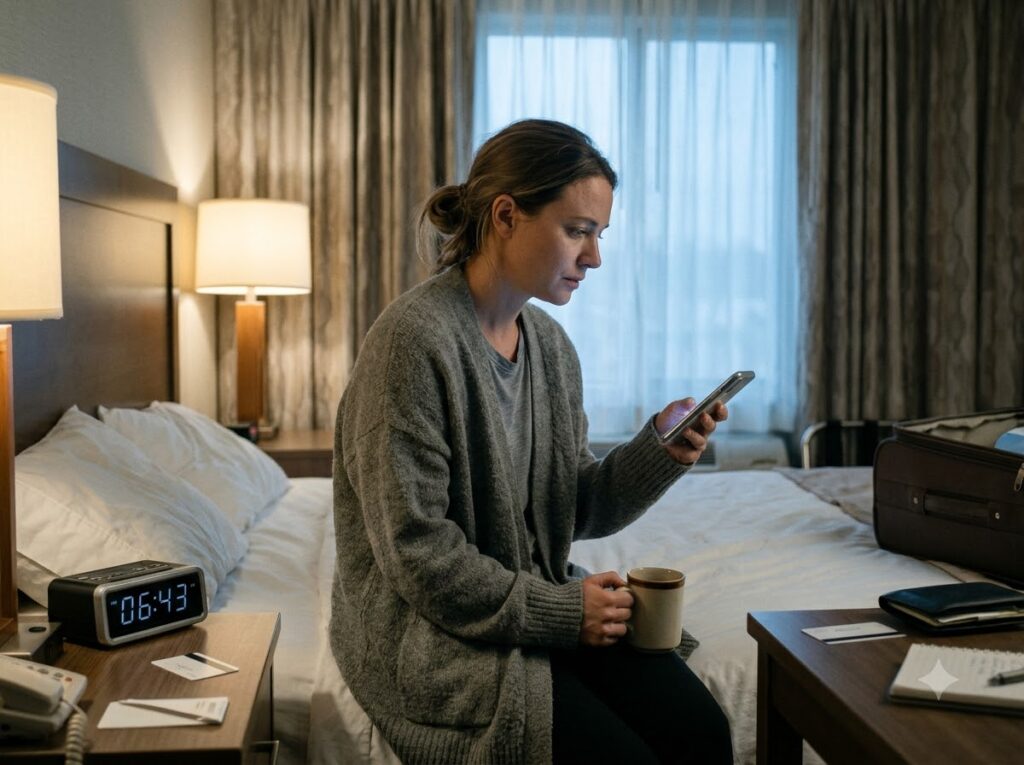
WE CHANGED ALL THE LOCKS ON THE FRONT DOOR AND THE GATE CODE. WE DON’T TRUST YOU ANYMORE.
I stared at it from a hotel room forty miles away, still holding my first cup of coffee. Then another message appeared from Mom: Your sister and her children need stability. Please don’t come here creating drama. Apparently, “stability” meant my younger sister Lauren had moved her family into the six-bedroom house on my horse property after separating from her husband—and my parents had decided I was the obstacle. I typed four words back to Dad.
Noted. That was clever.
He reacted with a thumbs-up.
That made me laugh.
For six years, Mom and Dad had lived at Cedar Ridge Farm outside Lexington, Kentucky, after selling their own home to cover Dad’s failed restaurant debts. The farmhouse, barns, forty-two acres, and guest cottage belonged to Cedar Ridge Equestrian LLC, a company I had created before they ever moved in. I bought the property with insurance proceeds after my fiancé died in a highway accident, built a small equine rehabilitation business there, and allowed my parents to occupy the main house because I spent most weeks traveling between veterinary clinics.
Then Lauren arrived.
Within three months, she moved her children into my guest rooms, filled one barn with furniture, and started referring to Cedar Ridge as “our family property.” Dad encouraged it. Mom told me Lauren deserved somewhere permanent because I was unmarried and “never really used the big house anyway.” When I reminded them that the farm supported my business, Dad said I was being territorial.
The argument exploded after Lauren announced she intended to convert my rehabilitation paddock into a pool.
I said no.
Two days later, they changed the locks.
What they did not know was that three days earlier, I had already signed a twelve-year operating lease transferring possession of the working farm to Bluegrass Equine Recovery, a nonprofit veterinary rehabilitation organization I had partnered with for years. The lease began Monday morning. I retained ownership through my LLC, but Bluegrass would operate the barns, paddocks, guest cottage, and main farmhouse as housing for rotating veterinary staff and families bringing injured horses for extended treatment.
My parents’ informal occupancy agreement had already been terminated properly months earlier after repeated violations. I had given them written notice, relocation money, and a deadline. Dad treated every letter as a bluff because I had always softened eventually.
Changing the locks apparently convinced him he had won.
At 9:10 Monday morning, six Bluegrass vehicles arrived at Cedar Ridge.
Dad called me before the second van cleared the gate.
“There are people outside claiming they’re taking over the farm.”
“They are.”
“You can’t lease our home.”
“It isn’t your home legally, Dad.”
“You’re locked out.”
I smiled.
“So are they.”
“What?”
“The gate system belongs to my company. You changed the keypad code, not the master access.”
Silence.
Then I heard shouting in the background.
A Bluegrass administrator had arrived with my attorney and a locksmith.
But that was not the part that finally frightened Dad.
My attorney was carrying a copy of the occupancy agreement.
Attached to it was an inventory report showing that, two weeks earlier, Lauren had removed equipment from one of my barns and sold it online.
Equipment worth almost $74,000.
And unlike a family argument over bedrooms and gate codes—
that was something I had already reported to the police.
The Bluegrass lease did not give anyone permission to throw my parents onto the road without process. My attorney, Rebecca Sloan, had handled the transition carefully. Their occupancy agreement had already expired, formal notices had been served, and I had offered relocation assistance before Lauren ever changed the locks.
Dad still insisted he could remain because he had paid utilities and property taxes several times over the years. Rebecca explained that contributing household expenses did not create ownership. Cedar Ridge Equestrian LLC remained the recorded owner, and Bluegrass now held contractual possession under the new lease.
Lauren’s situation was more serious. During a routine inventory before Bluegrass took over operations, my barn manager discovered that two portable ultrasound units, specialized therapy equipment, and several custom saddles were missing. Lauren initially told him I had authorized the sale.
I had not. The equipment belonged either to Cedar Ridge Equestrian LLC or to veterinary partners who stored it there under written agreements. My manager found listings on an equestrian resale platform using photographs taken inside my barn.
The seller account was connected to Lauren’s email address. Payment records later showed more than $31,000 had already been deposited into an account she controlled. Several pieces had been sold well below replacement value because she apparently wanted quick cash.
Lauren called me furious when police contacted her. She said Dad told her everything on the property was “basically family property” and claimed she believed selling unused equipment was no different from cleaning out an old garage.
Dad supported that story until Rebecca showed him the asset tags, purchase invoices, and storage agreements. One ultrasound machine belonged to a veterinary clinic in Louisville and had only been loaned to Cedar Ridge for a rehabilitation program.
Nobody arrested Lauren in front of her children. Investigators interviewed her, contacted buyers, and began recovering equipment where possible. I cooperated and stayed out of decisions that belonged to law enforcement and the actual property owners.
Meanwhile, Mom finally admitted she knew the locks were meant to keep me from discovering what Lauren had done. Dad had convinced her that if I could not enter the property for “a few weeks,” they would have time to replace the missing equipment before Bluegrass arrived.
That confession explained the timing. The lock change was never only about trust. It was about delay. They believed controlling the front door meant controlling what I could discover inside.
Then Rebecca obtained the locksmith invoice. Dad had not merely replaced residential locks. He had instructed the company to disable access to my business office and medication storage room as well, despite having no authority over either.
Popular Posts
→- 1
- 2
- 3
- 4




Recently Viewed
Stories you read recently will appear here.





